Showing posts with label DWI cases. Show all posts

Monday, January 7, 2013

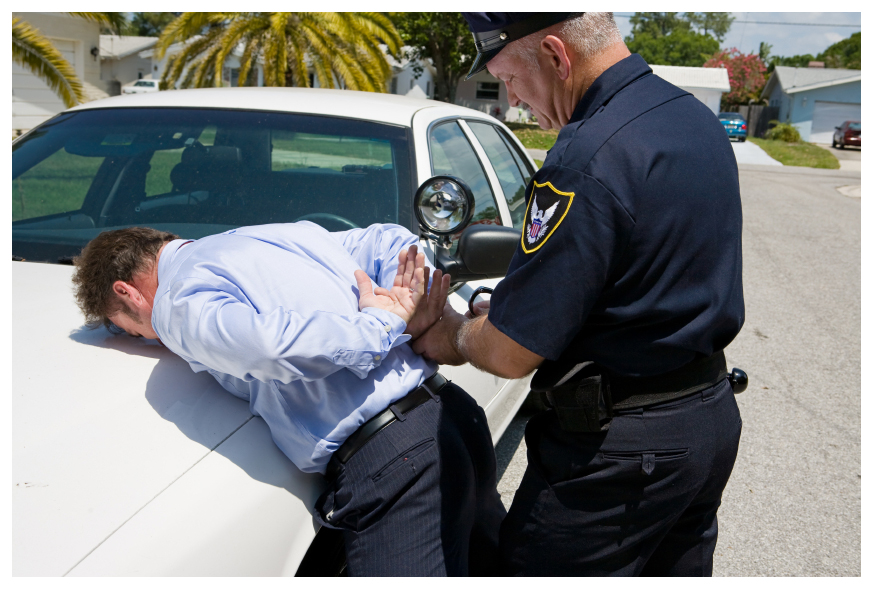
Stopped For a Minnesota DWI? (Explained)


As I am sure you're aware --- Minnesota Police Officer are focused on DWI enforcement  - often to the exclusion of all other offenses.  So... what does that mean for you, right?

Everyone knows weekends mean more celebrations... going out, etc, and that means more police on the roads. It's no secret -- the news even reports on it. So how do you stay out of trouble?

The first and best way to avoid a Drunk Driving Arrest --- and a call to an experienced Minnesota DWI Attorney is, of course, to avoid driving while impaired. You can:

Use a designated driver.
Call a commercial designated driver program if you have had a few too many (in the Twin Cities, services like Drink and Drive Intelligently (651-338-1425) or Dry Drivers (651-491-9363) provide you AND your car a ride home). 

Know your limits. 

B.A.C. Calculators can help you estimate whether you would fail a breathalyzer. 

Be safe.
Failing that, what happens if you get pulled over for Driving Under the Influence? 

What should you do, and what should you not do?

DO

  • DO be polite and courteous with police. You will NEVER help yourself by being rude or especially assaulting police.
  • DO take a breathalyzer test if requested. Minnesota is an "implied consent" state, which means it is a crime to refuse to submit to a breathalyzer. In fact, the penalties for refusing to take a breathalyzer test can be more severe than driving drunk. In almost all circumstances, you are better off taking the breath test, even if you think you will fail it.
  • DO pay attention to the officer's name and, if possible, badge number.
  • DO sign a traffic citation if you receive one. Signing a traffic ticket is just agreeing that you received it; it is not an admission of guilt.
  • DO write down your own version of what happened as soon as possible. It will help you remember later and may help you if your case goes to trial.
  • Finally, DO call a lawyer immediately if you are arrested, and refuse to answer any questions other than your identifying information.
DON'T
  • DO NOT, ever, verbally or physically assault a police officer. This will subject you to much more serious charges.
  • DO NOT lie to police officers. Again, this is far more likely to land you in greater trouble than it is to get you out of it.
  • DO NOT answer any questions about your evening or how much you have been drinking. You have a right not to answer questions. Exercise it.
  • DO NOT sign anything except a normal traffic ticket.
By following these steps, you can keep yourself out of trouble, or at least, keep the trouble you are already in from getting worse. Be safe this weekend.

Wednesday, January 2, 2013

What Does a Minnesota DWI Cost? (Explained)


Minnesota Drunk Driving charges come with severe penalties.. In addition to  license revocations, you could also be facing a HUGE fine and a conviction for a misdemeanor or even a felony - which means jail time.  Costs associated with a Minnesota DWI go well beyond the fees of an experienced Minnesota Criminal Defense Attorney.

Driver’s License Reinstatement

Fines related to your license being revoked depend on whether this is your first conviction or second DWI. These fees are nothing compared to the long-term costs associated with being convicted of a third or fourth offense. If that should happen, your license is cancelled indefinitely and/or you could go to jail for up to seven years.

If your driver’s license is revoked in Minnesota, you’re required to pay a reinstatement fee plus a license application fee for either a first or second conviction.  Total cost --- around $700

Alcohol Awareness Classes

Your history of DWI arrests, the circumstances of current arrest - such as your blood alcohol content (BAC) and your score when you completed a chemical health evaluation - determine how many hours you are required to attend classes as part of your probation requirements. Costs range from $250 – $400 for a 12-hour program and a 24-hour program, respectively.

Legal Fees

Because every case is different, a reputable attorney will not charge you for the initial consultation. During the consultation, the lawyer will learn all the facts and circumstances involved in your particular case. Most reputable criminal defense lawyers charge a “flat” fee, which ensures representation throughout the trial, regardless of the number of hours the lawyer works on the case or whether the case is dismissed or resolved through plea negotiations.

For more serious cases such as a fourth drunk driving conviction where jail time is likely, the higher the cost will be to defend you. For lower level crimes such as first offenses where probation or fines are likely, the price is less.

Like in all industries, when it comes to legal representation, you get what you pay for.


Let's stop this madness --- call today to get the answers you need.  Rolloff Law Office - (612) 234-1165

Tuesday, November 20, 2012

Affordable Lawyer - How You Can Tell (Explain)


Whether or not you've dealt with a Minnesota Criminal Defense Attorney or Minnesota DWI Lawyer before, you probably assume one thing - it's going to be expensive. And, if you are like me or like most people, you want to get the best lawyer possible for the lowest amount of money possible. Is that possible?

The DWI lawyer or criminal defense lawyer you decide to hire is going to be trusted with a lot of responsibility. They are holding your life in their hands. If they don't do the work they promise, or put forth the effort they promise, or pick up the phone when you call, you could end up in jail, you could end up with huge fines, and you could wind up losing everything that is important to you. What is your freedom, your hard earned money, and your reputation worth to you?

The Rolloff Law Office Doesn't Bill By the Hour, and We Don't Ask For More Money

At The Rolloff Law Office, we have a very simple fee structure. We have one price for your case, and that's it. That price depends on several factors, including the difficulty of your case, the facts of your case, and the expertise required for your case. But that one price is all we'll ask for. That means if you want or need to go to trial, we'll go, without asking for more money. Most Minnesota Criminal Defense Attorneys don't offer that. Most attorneys make you pay more to go to trial. They do it because they don't want to go to trial. When you sign up with us, you can trust that we'll do whatever it takes to win your case.

With This Much At Stake, Do You Really Want the Cheapest Option?

A lot of people are scared off by the fees we charge. We aren't the most expensive criminal defense and DWI defense law firm out there, but we aren't the cheapest. And the reason we aren't the cheapest is we provide far more value than the attorneys out there selling you on price. What we offer is unlike any Minnesota Criminal Defense Attorney out there. We offer great legal services, we offer great results, and we offer you the trust that at the end of the day we are doing everything we can to get the results you deserve.

A criminal charge is extremely serious. At a minimum you are facing 90 days in jail and a $1,000 fine. And the stakes only go up from there. I liken it to getting surgery. A bad result can affect you for the rest of your life. If you were getting brain surgery, would you want the cheapest guy you could find to do it? No. You'd want the best. You'd want someone with a proven track record. Even if you had to pay a little more for it. You'll get that with us.


If you need a Minnesota DWI Attorney, ready to help. We offer a FREE CONSULTATIONS and we are available 24 hours a day, 7 days a week to assist you. Call us today at (612) 234-1165 to find out how we can help you.

Monday, September 24, 2012

MN DWI Arrests (Mandatory Holds & Conditional Releases)

When a person is arrested for a first-degree (felony) or second-degree Minnesota DWI crime, the person must be taken into custody and detained until the person’s first court appearance, at which time the court generally sets bail and specifies conditions of release. Unless maximum bail ($12,000 for gross misdemeanor DWI) is imposed, a person charged with any of the following offenses may be granted pre-trial release from detention, but only if the person agrees to abstain from alcohol and to submit to remote electronic alcohol monitoring (REAM) involving at least daily breath-alcohol measurements. An experienced Minnesota DWI Attorney can assist you and your family with issues like these.
 
What Offenses?
 
These are the offenses that will lead to mandatory action by the court:
  • a third implied consent or DWI violation within ten years;
  • a second violation, if under 19 years of age;
  • a violation while already cancelled as inimical to public safety for a prior violation; or
  • a violation involving an alcohol concentration of .20 or more.
Further conditions apply to a person charged with a fourth or more violation within ten years, including:
  • impoundment of the vehicle registration plates, or impoundment of the off-road recreational vehicle or motorboat itself, if one was being driven; a
  • requirement for reporting at least weekly to a probation officer, involving random breath alcohol testing and/or urinalysis; and
  • a requirement to reimburse the court for these services upon conviction for the crime.


What To Do Next
Take the next, right step.  Call the Rolloff Law Office today for a free consultation.  The government has lawyers working against you.  It's time to get someone on your side who knows the ropes and will use that knowledge to protest your rights and your future.  Call (612) 234-1165 to begin the process of reclaiming your freedoms. Affordable, agressive and an ass-kicker.

Wednesday, July 25, 2012

Minnesota DWI License Restrictions (Explained)


It seems like every year, the State of Minnesota imposes harsher penalties upon those arrested for a Drunk Driving. This year is no exception, as effective July 1st, the legislature dramatically increased the license revocation penalties for Minnesota DWI offenses.  These penalties are imposed upon arrest.  If you need some assistance with a Drunk Driving arrest, your first best call is to an experienced Minnesota Criminal Defense Attorney.

How Bad is it?


When am I eligible for a limited license?

1st offense - (.08) BAC but less than (.16)

If this is your first offense and you are under (.16) BAC you may obtain a limited license fifteen days after the 7-day temporary license has expired (i.e. 22 days after the date of your arrest).

You will receive your full license after 90 days.  If you are under 21 years of age the license revocation is for a minimum of 180 days.

1st Offense - (.16) BAC or more

The license revocation penalty is for one year and you are not eligible for a limited license.

2nd Offense within ten years, or third offense on record of (.08) BAC but less than (.16)

The license revocation penalty is for one year and you are not eligible for a limited license.

2nd Offense within ten years of (.16) BAC

The license revocation penalty is for a minimum of two years.

3rd Offense within ten years

The license revocation penalty is for a minimum of three years.

4th Offense within ten years

The license revocation penalty is for a minimum of four years.

5th Offense or More Offense

The license revocation period is for a minimum of six years.

"Refusal to submit to testing" also carries the following penalties:

1st Offense Refusal:  The license revocation period is a minimum of one year.

2nd Offense Refusal:  The license revocation period is a minimum of two years.

3rd Offense Refusal:  The license revocation period is for a minimum of three years.

4th Offense Refusal:  The license revocation period is for a minimum of four years.

5th or More Offense:  The license revocation period is for a minimum of six years.


What Now?


The attorneys at the Rolloff Law Office experienced in challenging these license revocation procedures.  I provide a thorough and systematic analysis of every case and will exploit any weakness to defend the people I represent. I am available to discuss your case, seven days a week. Call me today and we'll take an immediate look at your case - (612) 234-1165.

Thursday, May 3, 2012

Minnesota Implied Consent Law (Explained)


Believe it or not - any individual who chooses to drive, operate, or be in physical control of a motor vehicle is assumed to have already consented to a breath, urine, or blood test to determine the presence of alcohol or hazardous or controlled substance in the body.  (See ... the things you probably didn't know that you didn't know --- this is why you need to speak to a Minnesota Criminal Defense Attorney.)  This chemical test is administered only after a police officer has established that there is probable cause to believe a Drunk Driving violation has occurred and that the person has been subsequently placed under arrest.

When is Probable Cause Established?
Probable cause exists only after a police officer reasonably suspects an impaired driving violation by observing impaired driving behavior.  This is usually accomplished when the officer observes any erratic driving conduct prior to the traffic stop. It can also be effectuated after the officer stops a driver - in their subsequent interaction.  (Here, the cop is looking for slurred speech, bloodshot watery eyes and the accused's overall appearance.) The officer will also critique the driver’s performance on some Field Sobriety Tests. Generally, after these tests a thorough officer will ask the driver to perform a preliminary breath test ("PBT") test to confirm his belief of impairment.

If an officer believes that probable has been established, the officer may then place the driver under arrest and (only) after reading the Minnesota Implied Consent Advisory, request an evidentiary breath, urine, or blood sample.

The officer is required to read the advisory - explaining that the test is mandatory, refusal to take the test is a crime, and the driver has the right to consult or speak with an attorney before agreeing to take the test. The individual is given a “reasonable period” of time under the “totality of circumstances” standard to contact an attorney.

Blood or Urine?

It is the officer that decides whether to administer a breath, urine or blood test. The Minnesota Bureau of Criminal Apprehension (BCA) analyzes blood and urine samples and forwards the results to Minnesota Department of Public Safety (DPS).

If a driver is asked to take a blood test - the individual can refuse - and the officer has to be afforded him or the chance to take breath or urine test.  That right to refuse also extends to urine - meaning that you can say "no" and the officer has to offer blood or breath.  (The rational is that some individuals are adverse to needles and they shouldn’t be charged with the crime of refusal simply because of this fact. The same rational applies to those who are offered a urine test, but for some reason are not able to physically urinate at the time.) However, if you're offered a breath test - you are required to do as much - or you do subject yourself to possible legal consequences.


What Should You Do?

My suggestion to anyone facing a legal dilemma is "talk to a lawyer."  Honestly, you only get one chance (all too often) to take on these things.  Get the answers you need to make the next right decision - your future could depend on it.  Call the Rolloff Law Office today at (612) 234-1165 to set up a FREE Consultation. 

Friday, April 6, 2012

Avoid a Minnesota DWI (After You've Been Pulled Over)


I don't think that anyone ever plans one being pulled over by the police for a DWI but if you are one of those types who likes to be prepare for every eventuallity, then here are some helpful tips.

Propbably more than any other criminal offense, law enforcement is often hard at work arresting people for Drunk Driving.  Believe you me, the cops are looking to make arrests and in the process often arrest perfectly innocent people or shortcuting  investigation to make their stats.

So what should you do to make sure you are not falsely convicted of a Minnesota DWI? 
Here are five practical tips you can follow to protect yourself and your rights:

1. Shut up!

The consitution affords you the right to remain silent; so use it.  It’s amazing how many people try to reason with the officer and end up talking their way into trouble instead of out of it.  Don’t tell them where you are coming from; don’t tell them where you are going.  Just give them the requested documents and identification information and stay quiet.

Sure, the police will try to pressure you to talk.  They may lie and say things like “Looks like you’ve got something to hide” or “By not cooperating you’re only making things worse for yourself.” Don’t fall for these lies and pressure tactics.  Politely answer: “Officer, I choose to use my right to remain silent”.
Remember, “ANYTHING you say, can and will be used against you in a court of law.” But, your silence can never be used in that manner.

2. Don’t Blow

The portable breath testing (PBT) machines that the police use in the field are very inaccurate. Even if you have had nothing to drink, the faulty technology in these machine can still produce an erroneous result.  The good news is blowing into them is 100% optional. So, refuse it.

Your refusal to blow into these devices cannot be used against you in the State of Minnesota  Granted, failure to do as much might lead to your arrest - but if the officer intended on arresting you --- then this test was going to be your saving grace anyway.  (Note: You you do have to submit to the request for a blood, breath or urine sample asked of you back at the cop shop.  If you do not, you maybe charged with a DWI Refusal.

3. Don’t Do the Field Sobriety Tests

Sometimes police officers will ask you to step out of the vehicle to perform some physical tests like the Walk and Turn, a one-leg stand and/or follow-my-finger-with-your-eyes test.  Like the PBT, these are also completely voluntary and can only cause you trouble.  Many sober people have physical conditions that may cause them to fail or they might be clumsy or nervous.   This is why you are better off staying put and refusing.

4. As Soon as Possible: Write Things Down

Make sure to take notes so you don’t lose track of important facts. Don’t give it to anyone.  Make sure to note the time of stop, where it was made, weather conditions, the name of the officer, names of witnesses and any other possible details.  Details win cases and the more you have the stronger your case can be.  (Believe it or not - law enforcement can be sloppy.  If they fail to dot their I's or cross their T's --- that could be your saving grace.)

5. Get a Lawyer. Fast.At the first opportunity possible call an experienced Minnesota Criminal Defense Attorney and get some answers.  Many matters in a DWI case are time sensitive and contacting a lawyer early on can greatly increase your chances of a successful defense.


DWI defense is one of the cornerstones of my practice. Please do not confused what I have offered here as a "get out of jail free" card.  Rather, I'm relating to you some of my knowledge from having had not only defended many DWI cases - but also the hundreds that I prosecuted.  I take Drunk Driving very seriously and encourage everyone to make responsible decisions.  I'm not encouraging people to drive while intoxicated. In fact, what I'm trying to do here is encourage innocent people to be aware of their rights and use them to protect themselves against false conviction.

If You need help call the Rolloff Law Office today - (612) 234-1165.  Take the next right step.

Monday, November 14, 2011

Do You REALLY Need a Lawyer? (Explained)


If my experience as a prosecutor and as a Minnesota Defense Attorney has taught me anything it is that if someone comes forward and seeks help (and or volunteers information to law enforcement,) they will be prosecuted mercilessly.

Why? 

Well, apparently, that is our legal culture. 

Instead of working to redeem the fallen, the government all too often takes some perverse joy in punishing wrong doers.  Now, this does not mean that that's always the case, but our laws - in how they're written and applied - seem to default to this outcome more times than not.  Therefore, all rationality goes out the window - and as such I cannot encourage someone to go it alone or seek help (if their problem or issue is legal in nature) without someone who knows the "game" by their side every step of the way. 

This is why I am a criminal defense attorney - plain and simple.  If you're going to get kicked while you're down - you need someone at your side who can defend you and fight back because as much you and I would like to believe that the government has our best interests in mind --- that is just NOT always the case. 


What Should You Do?

Here's the deal, a lot of people (myself - at one time included) believe that their lack of cooperation or their desire to engage a lawyer before talking to law enforcement would end up being worse for them than if they just go in an explain themselves . Well, let me set you straight - that is simply untrue.  In all of my years of experience, I can barely recall a situation where cooperation (whether someone was innocent or not) worked out for the better.  

Here's what you have to understand, more often than not the government thinks they know what happened already - so instead of listening to your explanation, they're often only really looking for those things that you say and do that confirm their suspicions.  As such, "going it alone" or "helping the police" (who in turn say they'll help you) rarely turns out to be as simple as it sounds.

If you or someone you love is embroiled in some sort of legal dilemma - the best thing you can do to preserve your rights and your future is to talk to a lawyer - first - to understand exactly what you're dealing with.

Call the Rolloff Law Office today to find out more.   

Thursday, November 3, 2011

Minnesota Criminal Defense - Top 10 Constitutional Rights


With all apologies to David Letterman... these are (IMHO) the 10 Most Important Constitutional Rights you and I have.  If you or a loved one is facing criminal charges, it is imperative that you understand that you have rights. The paramount one being the right to retain a Minnesota Criminal Defense Attorney. The accused is guaranteed the right to legal representation, whether the attorney is appointed for him or he hires a private attorney.

10.    Right to an attorney;
  9.    Right to effective assistance of counsel;
  8.    Right to cross examine and confront witnesses;
  7.    Right to testify on one's own behalf;
  6.    Right to remain silent;
  5.    Right to a speedy trial;
  4.    Right to use courts subpoena power to compel witnesses to testify;
  3.    Right to a jury trial (in most cases);
  2.    Right to an impartial jury; and
   1.   Right to produce evidence on your behalf.

Hmm... that seemed funnier when Letterman did it.  But seriously, these things are important.  If you find yourself charged with a crime you owe it to yourself to at least talk to an attorney about your options - and learn how a conviction could impact you both in the short- and long-term.  Court, judges, prosecutors --- this is all serious stuff.  Don't go it alone.


If you need answers to your legal dilemma, feel free to call the Rolloff Law Office at (612) 619-0262 to set up a free, no obligation consultation today. 

Friday, September 16, 2011

Minnesota Probation Violations (Explained)


Often as part of every criminal sentence meted out by a judge - for a misdemeanor, gross misdemeanor and felony plea - is the prospect of being placed on Probation.  In my opinion, the system would want one to believe that this is a type of leniency that allows a convicted individual to remain in or re-enter society.  But, as anyone who has ever been placed on probation - there's often nothing too easy abou it.

Generally speaking, defendants may be sentenced only to a probationary term or probation may be granted after some time in custody has been served.  If someone is place on probation, that person is often supervised by an agent - who is employed by the corrections system.

If you receive notice of a Probation Violation, or even if you just think you may have violated your probation but have not yet been suspected or accused of it, you should quickly contact an experienced Minnesota Probation Violation Defense Attorney.

Probation Violations (Defined)

Because Probation is a form of leniency, it can be revoked at any time.  This often is the case when someone violates the terms of the probation sentence laid out by the judge.  A few examples of such violations includes:incurring a new criminal charge, failing to submit to or failing a drug/alcohol test, moving - without informing your agent, missing a scheduled probation meeting, and/or failing to appear for court.


If You've Violated Your Probation

If you are suspected of committing a violation, you'll often receive notice of it and be ordered to appear in court.  At a violation or Probation revocation hearing, the court will determine whether the violation actually occurred and then you'll be asked if you admit or deny the violation.  If you deny it, the government must put forth evidence showing that it is more likely than not that you in fact did fail to follow the court's order.  You'll also have a chance to put forth your own evidence.  Then, the judge decides if that burden is met. 

Probation Violations (Consequences)

If you're found to have violated your probation, there are a number of possible outcomes - good and bad, such as: continuing the probation without punishment for the violation,  modifying the conditions of the probation or extending the length of probation,  revoking the probation and executing the stayed (ie., suspended) jail sentence hanging over the violator's head. This basically means that your original sentence would be re-activated.

Probation Violations Defenses

Since the burden of proof is much lower at a Probation Violation hearing than at trial, it is very important that you be represented an experienced Minnesota Criminal Defense Attorney.  Often the best defense is no defense at all; rather, I've found that my best successes come when working with the government's lawyers to arrive at an agreement that elevates the need for a hearing and/or the harshest of consequences. Even if your violation stems from a new criminal offense, not only can I fight to win you a dismissal or acquittal on those charges - I can also work to ensure that the new sentence runs concurrently with (and not consecutively to) the probation sentence.


What Should You Do?

For a long time now, Minnesota law has recognized that people who have make a few, isolated mistakes while on probation should have the opportunity to not have that error to lead to the ultimate consequence.  If you feel as though what you've read here applies to you, contact an experienced Minnesota Probation Violation Hearing Attorney to discuss your questions and concerns and to get the ball rolling working to ensure that your slip doesn't continue to hinder your future.

Thursday, July 7, 2011

Minnesota DWI Arrest - Now What?


If you've been arrested for Drunk Driving - you probably have a million questions. These are some of the  most frequent questions I get.

• What's really going to happen to me as a result of my arrest?

Not only will you be facing the possibility of criminal sanctions - you also need to know you could lose your driver's license, have your vehilce's license plates impounded and be subject to having an Ignition Interlock Device installed . 

•What kind of penalty am I likely to get after DWI offense?

If it is your first offense, most judges order you to pay a fine, do some sort of community work-service and an have your alcohol use assessed.  If this is your second, third or fourth offense, then the penalties are more severe and could include increased fines, looooong jail sentences, and even the loss of your vehicle.

•Will it is dangerous to take a blood, breath or urine test if I'm asked?

In Minnesota, if you fail to test - back at the station - that's a crime in an of itself.  Before being asked to provide a sample for testing, take advantage of your right to consult an expereinced Minnesota DWI Attorney. Due to the recent changes in the state's DWI laws - you'd be foolish to do otherwise.

•Can a Minnesota DWI Lawyer help avoid a conviction for a first-time DWI arrest?

An experienced and qualified DWI lawyer can help you to avoid or reduce the penalties and punishments you might face, if you've been arrested for Drunk Driving. At a minimum, he'll ensure that the government followed standard procedures and if they failed to do so - he will make the proper arguments in court to ensure that those errors are pointed out.  


If you or someone you love has been arrested for Drunk Driving, you should immediately contact an experienced Minnesota DWI Lawyer to learn your rights and to begin the fight to get you the results you desire.