Showing posts with label drunk drivier. Show all posts

Wednesday, January 2, 2013

What Does a Minnesota DWI Cost? (Explained)


Minnesota Drunk Driving charges come with severe penalties.. In addition to  license revocations, you could also be facing a HUGE fine and a conviction for a misdemeanor or even a felony - which means jail time.  Costs associated with a Minnesota DWI go well beyond the fees of an experienced Minnesota Criminal Defense Attorney.

Driver’s License Reinstatement

Fines related to your license being revoked depend on whether this is your first conviction or second DWI. These fees are nothing compared to the long-term costs associated with being convicted of a third or fourth offense. If that should happen, your license is cancelled indefinitely and/or you could go to jail for up to seven years.

If your driver’s license is revoked in Minnesota, you’re required to pay a reinstatement fee plus a license application fee for either a first or second conviction.  Total cost --- around $700

Alcohol Awareness Classes

Your history of DWI arrests, the circumstances of current arrest - such as your blood alcohol content (BAC) and your score when you completed a chemical health evaluation - determine how many hours you are required to attend classes as part of your probation requirements. Costs range from $250 – $400 for a 12-hour program and a 24-hour program, respectively.

Legal Fees

Because every case is different, a reputable attorney will not charge you for the initial consultation. During the consultation, the lawyer will learn all the facts and circumstances involved in your particular case. Most reputable criminal defense lawyers charge a “flat” fee, which ensures representation throughout the trial, regardless of the number of hours the lawyer works on the case or whether the case is dismissed or resolved through plea negotiations.

For more serious cases such as a fourth drunk driving conviction where jail time is likely, the higher the cost will be to defend you. For lower level crimes such as first offenses where probation or fines are likely, the price is less.

Like in all industries, when it comes to legal representation, you get what you pay for.


Let's stop this madness --- call today to get the answers you need.  Rolloff Law Office - (612) 234-1165

Thursday, September 20, 2012

Minnesota DWI Arrest (What Should You Do?)


As a Minnesota Criminal Defense Lawyer --- the cases I get the most questions about (and the number of cases I work on most are Drunk Driving charges --- combine that with my experience as a former prosecutor and you can be assured I know a little something about this dilemmas.  Here are some answers to the most common questions:

WHAT TO DO IF STOPPED BY THE POLICE FOR A MINNESOTA DWI?

  1. BE POLITE (The officer is the Judge at the side of the road;)
  2. DO NOT SUBMIT TO ANY FIELD SOBRIETY TESTS, INCLUDING A HAND-HELD PBT;
  3. SUBMIT TO A BREATH CHEMICAL TEST (A REFUSAL TO SUBMIT WILL LEAD TO A WHOLE NUTHER CHARGE;)  
  4. NEVER SPECIFY AN AMOUNT OF ALCOHOL THAT YOU HAVE CONSUMED.

IF YOU HAVE BEEN ARRESTED - WHAT THEN?

You next best move is to call the Rolloff Law Office - at (612) 234-1165.  The sooner you get a lawyer on board, the better your chances to earn the best possible outcome for your case.  

Tuesday, September 11, 2012

Why Hire a DWI Lawyer? (Explained)


If you have been charged with a Drunk Driving --- you should seriously consider hiring an experienced Minnesota Criminal Defense Attorney --- or at the very least talking to one about your rights.  My reason for suggesting this is not just because I am an attorney.  Here are some ways an attorney can help with your case --- and your future!

Pleading guilty can actually cost a lot more than hiring a Minnesota DWI Lawyer.

Believe it or not, there are many long term consequences to pleading guilty to a Drunk Driving --- that aren't immediately made know to you by the prosecutor or the judge --- including potentially having to tell to every potential employer for the rest of your life that you were convicted of a serious crime, having to pay increased insurance premiums and being excluded from international travel.

Honestly, do you really know what all of the consequences are that you may face in your future? If you don’t, you should consult with an experienced Minnesota DWI Lawyer so that you can make an informed decision regarding your case.

Hiring an experienced Minnesota Drunk Driving Lawyer is an investment in your future.

The prosecutor does this for a living – prosecutes criminal cases. You can rest assured they know the issues in a DWI case, that they have read the case against you, and that they are prepared to argue aggressively for a conviction. That’s their job. Shouldn’t you have someone just as prepared – if not more so – ready to argue aggressively on your behalf, too?

When you weigh the cost of pleading guilty and all the future costs that come with it, against the cost of hiring a Minnesota DWI Lawyer, you will find that hiring an  attorney is an investment in your future.

Not all Minnesota DWI Lawyers cost the same.

Each attorney charges what he or she has determined is an appropriate fee for the level of his or her services. Don’t hesitate to ask a lawyer what it will cost to represent you. But --- don't just go with cost when making your decision not all Minnesota DWI lawyers are the same. Your lawyer is the one person in the court room who is on your side, unconditionally. You need to feel comfortable with your lawyer – your relationship with your lawyer can make or break your case: Your lawyer will rely on the information you share with him or her in defending you. If you and your lawyer don’t have a good working relationship, you won’t trust your lawyer with this critical information. The key to a successful attorney-client relationship is the same thing that makes all relationships succeed or fail.


Before opening my own office, I started out prosecuting Minnesota DWI case --- hundreds of Drunk Driving cases.  Let me put that experience to work for you.  Learn for yourself --- Call to Rolloff Law Office at (612) 234-1165 to schedule an office visit and come in and see us in person,

Friday, April 6, 2012

Avoid a Minnesota DWI (After You've Been Pulled Over)


I don't think that anyone ever plans one being pulled over by the police for a DWI but if you are one of those types who likes to be prepare for every eventuallity, then here are some helpful tips.

Propbably more than any other criminal offense, law enforcement is often hard at work arresting people for Drunk Driving.  Believe you me, the cops are looking to make arrests and in the process often arrest perfectly innocent people or shortcuting  investigation to make their stats.

So what should you do to make sure you are not falsely convicted of a Minnesota DWI? 
Here are five practical tips you can follow to protect yourself and your rights:

1. Shut up!

The consitution affords you the right to remain silent; so use it.  It’s amazing how many people try to reason with the officer and end up talking their way into trouble instead of out of it.  Don’t tell them where you are coming from; don’t tell them where you are going.  Just give them the requested documents and identification information and stay quiet.

Sure, the police will try to pressure you to talk.  They may lie and say things like “Looks like you’ve got something to hide” or “By not cooperating you’re only making things worse for yourself.” Don’t fall for these lies and pressure tactics.  Politely answer: “Officer, I choose to use my right to remain silent”.
Remember, “ANYTHING you say, can and will be used against you in a court of law.” But, your silence can never be used in that manner.

2. Don’t Blow

The portable breath testing (PBT) machines that the police use in the field are very inaccurate. Even if you have had nothing to drink, the faulty technology in these machine can still produce an erroneous result.  The good news is blowing into them is 100% optional. So, refuse it.

Your refusal to blow into these devices cannot be used against you in the State of Minnesota  Granted, failure to do as much might lead to your arrest - but if the officer intended on arresting you --- then this test was going to be your saving grace anyway.  (Note: You you do have to submit to the request for a blood, breath or urine sample asked of you back at the cop shop.  If you do not, you maybe charged with a DWI Refusal.

3. Don’t Do the Field Sobriety Tests

Sometimes police officers will ask you to step out of the vehicle to perform some physical tests like the Walk and Turn, a one-leg stand and/or follow-my-finger-with-your-eyes test.  Like the PBT, these are also completely voluntary and can only cause you trouble.  Many sober people have physical conditions that may cause them to fail or they might be clumsy or nervous.   This is why you are better off staying put and refusing.

4. As Soon as Possible: Write Things Down

Make sure to take notes so you don’t lose track of important facts. Don’t give it to anyone.  Make sure to note the time of stop, where it was made, weather conditions, the name of the officer, names of witnesses and any other possible details.  Details win cases and the more you have the stronger your case can be.  (Believe it or not - law enforcement can be sloppy.  If they fail to dot their I's or cross their T's --- that could be your saving grace.)

5. Get a Lawyer. Fast.At the first opportunity possible call an experienced Minnesota Criminal Defense Attorney and get some answers.  Many matters in a DWI case are time sensitive and contacting a lawyer early on can greatly increase your chances of a successful defense.


DWI defense is one of the cornerstones of my practice. Please do not confused what I have offered here as a "get out of jail free" card.  Rather, I'm relating to you some of my knowledge from having had not only defended many DWI cases - but also the hundreds that I prosecuted.  I take Drunk Driving very seriously and encourage everyone to make responsible decisions.  I'm not encouraging people to drive while intoxicated. In fact, what I'm trying to do here is encourage innocent people to be aware of their rights and use them to protect themselves against false conviction.

If You need help call the Rolloff Law Office today - (612) 234-1165.  Take the next right step.

Monday, November 21, 2011

Minnesota Charges - Dismissed (Explained)


As an experienced Minnesota Criminal Defense Attorney, the one outcome more than any other that brings me and my clients the greatest joy is having their charges dismissed or significantly reduced.

Believe it or not this does happen, in one way or another in court rooms throughout the state - everyday. There are many possible options—some quite complicated—to get the charges against you reduced or taken off the table entirely. But the process of doing that starts with one simple step: getting a savvy, aggressive Minnesota Criminal Defense Attorney on your side, right away, who will fight for the best possible outcome.

What to Look Out For

First and foremost, I would caution anyone to be wary of lawyers who quickly promise to get your case dismissed.  Sometimes, that the reduction or dismissal of charges is just not possible.

While it is always my number one priority to work to get the charges against my clients dismissed, the best (and often the only) way for that to be done is to thoroughly explore the circumstances of your case before making any determination as to the possibility of dismissal.

No Minnesota Criminal Defense Attorney can promise you a certain outcome for your case; however, what I can promise you is tough, aggressive lawyer who will look into every option to get you the best results for your case.

How Criminal Charges Get Dismissed

Ultimately, there is only one person who dismiss the charges against you - the judge. Often individuals mistakenly believe that if only the person who originally pressed charges his or her mind the case will just go away.  That is just not true.  In reality, once the government's attorneys take the case, the decision to continue with it is in their hands.


Ways to Get Your Minnesota Charges Dismissed

Essentially, there are two ways to get Minnesota criminal charges dismissed or discharged:

1. Where the government can't prove guilt beyond a reasonable doubt.

In these cases, often there's was something legally wrong with: (a.) the accusations, or (b.) the process of arrest and investigation. Many times, charges can be dismissed if there is not enough evidence to sustain the charges or the defendant has not been arrested within the legal process of the law (for example, where the defendants are interrogated after they stated they were invoking their 5th Amendment right to remain silent) or if evidence was gathered in violation of the offender's constitutional rights. For any of these reasons, cases can dismissed. One other way charges are often dismissed is when the alleged victim of the "crime" refuses to cooperate with the government.

2. Where the government can prove guilt beyond a reasonable doubt.

An odd situation to be sure, but in these cases - even if the judge decides that the defendant is in fact, guilty of the charges - sometimes the nature of the charges and/or the criminal history of the defendant indicates that the case should not go forward.  Often this is done under circumstances such as when the offense charged low level misdemeanor and/or if the defendant has a clean (or even mild) criminal record.  At this point, an agreement can be reached where the judge may decide to dismiss the allegations or offer some type of alternative sentencing. Alternative sentencing can come in a variety of forms, including fines, community service, probation, etc.


What Should You Do?

My approach to handling my client's cases is to be persistent and to diligently work toward getting them the outcome they desire - ie., getting their case dismissed if at all possible. To do that, I explore all options; I gather all necessary information regarding your arrest and the investigation by law enforcement agencies; and I consider the circumstances of the charges in your case, as well as your previous criminal history. Then, and only then, do I move forward with the options for dismissal available in your criminal case.

Since dismissals can occur anytime after the arrest (and often they happen later rather than sooner,) I never lose sight of that option throughout the proceedings. In that time, I'll work to negotiate throughout your case with the goal of getting the charges against you discharged.

If you (or someone you love) thinks that they need a lawyer, you probably need a lawyer.  Call the Rolloff Law Office today and schedule a no-cost, no obligation consultation - today.

Tuesday, November 8, 2011

Minnesota DWI Myths - Part 3 (Explained)


There are myths and then there are MYTHS.  Here are some of the most common misconceptions regarding Minnesota DWIs that I'm often called on to respond to.
 
1. Sucking on pennies or using mouthwash will help lower your blood alcohol concentration result.
WRONG: Sucking on pennies or anything else that is copper will have no effect on your blood alcohol concentration (BAC) result. As far as mouthwash or breath sprays go, these substances can actually inflate the amount of alcohol found in BAC results, not lower them. Both of these substances contain low amounts of alcohol that an advanced breathalyzer may be able to pick up.

2. You must take the Field Sobriety Tests.
WRONG: While the police are not required to tell you this, in the State of Minnesota, the law does not require that you perform any type of test, including a Field Sobriety Test. However, you should know that if you do refuse to perform this test, the officer will most likely arrest you. You should always take in your surroundings and consider whether or not you are able to successfully pass a field sobriety test before you out right refuse.

3. Field Sobriety Tests are always an accurate measure of a person’s BAC level.
WRONG: Even the National Highway Traffic Safety Administration has said that people, even when they are sober, have difficulty correctly performing field sobriety tests. Several factors such as nervousness, fear, fatigue, weather conditions, leg/foot injuries, etc. can all have an impact on the results of a field sobriety test.

4. “Alcohol on the breath” is a reliable sign of alcohol intoxication.
WRONG: One fact that many people don’t know about alcohol is that it is actually odorless. What people are smelling when they perceive alcohol on the breath is the smell of the ingredients often included in alcohol. For instance, the breath of someone who has been drinking O’Douls Non-Alcoholic beer will smell the exact same as someone who has been drinking Budweiser. Therefore, breath odor strength estimates are completely unrelated to a person’s BAC level.


 What Should You Do?

The number on myth I'd like to explode is this: I can defend myself effectively in this kind of case, if I just let the judge know the facts.

Sure, if you have a stomach ache - maybe it's okay to take in some Pebto. Or, if you have a headache - to self-diagnoses and pop a couple of Advil. However, if you break a bone or your appendix bursts - your best bet would be to talk to an expert. I'm sure no one would say that you should personally attempt to remove that appendix or set that bone.

If you're arrested for a Minnesota DWI, you need an experienced Minnesota Criminal Defense Attorney to help you get past the many pitfalls and adverse consequences - criminal and civil - that lie in your path. Do yourself a favor and (at a minimum) consult with someone one who is experienced in the defense of DWI cases, and who is well versed on the law and facts regarding these offenses. Your investment in such representation is essential.

Wednesday, November 2, 2011

Minnesota DWI Myths - Part 2 (Explained)


There are myths, legends, tall tales and there are truths.  When it comes to monsters and whatnot - such stories are probably okay. But, I guessing that when it comes to you and your future - not so much - right?  Seriously, there are a lot of stories out there about DWI arrests.  Some are not so true, some are purely false and others ... I call myths.  As an experienced Minnesota DWI attorney, I've heard them all.  Today, I expose the myth and set the truth straight.

1.  If I am convicted of Drunk Driving, and I lose my license, I can get a restricted license.

Yes, and no. Believe it or not a conviction is not required to have one's driver’s license revoked for a period of time. In nearly every case, the Minnesota Department of Public Safety can, and does, revoke driver’s licenses without requiring a court conviction of an offense of Driving Under the Influence. In fact, should your blood, breath or urine test at (.08) or greater, your license will be automatically revoked without your ever having had appeared in court or before a judge. Know this too, even if your are ultimately acquitted of DWI (or the criminal charges are dismissed) your license revocation may still stand, since the procedures and rules of the DPS operate independently of the court system. Further, a restricted license is only granted under certain circumstances and specific times.  Each case is different.

TIP: By challenging a license revocation, your attorney can have some control over when your license will be revoked, rather than when the DPS or the arresting officer says it will happen.

2. Even if I am convicted of a Minnesota DWI, because of my excellent driving record, I will probably get probation, and not have to go to jail or do community service.

Your excellent driving record really won't amount to much - when it comes to an arrest for Drunk Driving.  No probation is possible, but in most jurisdictions every person who is convicted of such an offense must serve at least 2 days in jail, or must perform some form of community service. Often there are no exceptions.  And we're only talking about a 1st offense.  If you're on your 2nd or 3rd DWI - the mandatory minimums are much more onerous.  No exceptions, unless you agree to enter a long and costly alcohol rehabilitation program.

TIP: If you consent to treatment or some other form of rehabilitation you maybe able to reduce some of the often allotted periods of jail and community service.  As a former prosecutor, I know what the prosecutor and the judge would like to see on the record before they agree to leniency.  If you're looking for a break - you need someone to go into court and get it for you.

3. If I am stopped and arrested for DWI, I am as good as convicted.

This is an all-time favorite of mine because it hits upon a maxim I learned all to well as a former DA: All arrests do not lead to convictions.  Despite the attitude of many courts and prosecutors, there are defenses to the crime of Drunk Driving which should be raised by you or your experienced Minnesota Criminal Defense Attorney.  Sadly, there are law enforcement officers who are not above coloring the truth and are willing to "fudge" their interpretation of what lead to a DWI arrest.  Also, many of these same officers are just not qualified to administer the tests you're asked to take and/or they make mistakes when doing so. Now, if you just fall on your sword and plead guilty, you have a 100% chance of being found guilty. However, i you are willing to fight for your rights, and to contest the government's case, you will have the best chance of a satisfactory outcome.  (And get this, more often than not the outcome for for the arrestee does not get worse because they want to challenge the government ... so don't be afraid to stand up for yourself!)

TIP: Pleading Not Guilty at the Arraignment does not mean that you cannot change your mind later. For this reason, do not plead guilty until you are satisfied that nothing can be done to improve your legal position. Your attorney will know how to advise you.


What You Should Do!

The number on myth I'd like to explode is this: I can defend myself effectively in this kind of case, if I just let the judge know the facts.

Sure, if you have a stomach ache - maybe it's okay to take in some Pepto. Or, if you have a headache - to self-diagnoses and pop a couple of Advil. However, if you break a bone or your appendix bursts - your best bet would be to talk to an expert. I'm sure no one would say that you should personally attempt to remove that appendix or set that bone.

If you're arrested for a Minnesota DWI, you need an experienced Minnesota Criminal Defense Attorney to help you get past the many pitfalls and adverse consequences - criminal and civil - that lie in your path. Do yourself a favor and (at a minimum) consult with someone one who is experienced in the defense of DWI cases, and who is well versed on the law and facts regarding these offenses. Your investment in such representation is essential.

Call the Rolloff Law Office today to set up your free consultation.

Wednesday, October 26, 2011

No Means No? DWI Refusals (Explained)

A charge of DWI - Test Refusal is in many ways a lot like an arrest for Drunk Driving.  However, the crime isn't driving while intoxicated; rather, the offender is charged with refusing to submit to a test of their blood, breath or urine - at a time in which law enforcement has probable cause to believe they were driving drunk.

The difference may sound minor - to anyone but a lawyer - but the outcome quite serious.  Under the laws of the State of Minnesota, an officer can require someone to submit to a DWI test if the he has reason believe that the individual was driving while under the influence of alcohol.  This is Minnesota’s Implied Consent law.  (Believe it or not, by driving on a public roadway in the state you automatically consent to submitting to such a test if law enforcement proper cause.)  Refusing to take this test is a crime, which is often more severe than a regular DWI if you had in fact just agreed to the chemical test.

Why is a Refusal Worse than a Drunk Driving Arrest?

Initially, Test Refusal was a more lenient charge than a Drunk Driving - under certain circumstances.  However, those that came before us burned that bridge by refusing tests (to receive lower consequences than if they had taken the test) at a rate that caused the powers that be changed the law to make it equal to the most severe DWI you can receive under the circumstances.  Therefore,  today is very little incentive to refuse the test.


If it's a Crime, Why Do Individuals Still Refuse?

The most common excuse I've seen for not submitting a sample of one's blood, breath or urine for testing is because they're confused about the request in the first place.  If you've read this blog, you know that I often advise individuals to not talk with the police and refuse their requests for things like searches, providing statements and the like in order to protect their rights.  However, refusing a DWI test has the exact opposite effect - it imposes severe criminal liability. 

Prior to seeing the required sample, this is laid out quite clearly by the officer seeking submission to the test - when he recites the Implied Consent Warning.  However, that warning fails to explain that you also quite likely opening yourself up to harsher consequences than if you'd have go through with the test in the first place.


How Do You Fight This Charge?

Law enforcement can require submission to a test only if they have probable cause to believe that you've been drinking and driving.  So, the best way to avoid a charge is to prevent creating probable cause - don't drink and drive.  That being said, I am sure if you're reading this that ship has passed.  If you've been cited for Refusal - you need the assistance of an experienced Minnesota DWI Attorney. 

Not only will they fight to preserve your rights and your future.  They also will be able to discern whether someone actually refused.  That's right - often these cases come into being not because someone says "no" to the test - but rather because there are times that an officer assumes such a response.  If that's the situation in your case call The Rolloff Law Office today at (612) 234-1165.  I believe I can root out the holes in these assumptions and in turn get you the best outcome possible.

Friday, October 14, 2011

Minnesota DWI and Criminal Attorney Fees (Explained)


Whether or not you've dealt with an experienced Minnesota Criminal Defense or DWI Attorney before, you probably assume one thing - it's going to be expensive. And, if you're like me or like most people, you want to get the best lawyer possible for the lowest amount of money, right?

Although I agree that price is a valid factor to consider, you also need to acknowledge this: the Minnesota DWI Attorney that you decide to hire is going to be trusted with a lot of responsibility. He will be holding your life - and your future - in his hands.

If he fails to do the work, put forth the effort or pick up the phone when you call - it's not him that will pay the price.  Rather, you (and you alone) will be the one who could end up in jail, paying huge fines and losing everything that is important to you.

In the end, you need to ask yourself this: What is my freedom, my hard earned money, and my reputation worth to me?

With So Much at Stake, Do You Really Want the Cheapest Option?

Some people can be scared off by the fees I charge.  Now, I'll guarantee you I'm not most expensive Minnesota Criminal Defense Attorney out there, but I'm also probably not the cheapest either.  I charge what I charge because I provide more value than the attorneys out there selling you on price. What I offer is, unlike other Minnesota DWI attorneys, great legal services that earn my clients the results that they desire.  I can also assure you that at the end of the day I'm doing everything I can to protect you, your rights and your future. 


Do This Now

If you think you need a Minnesota Criminal Defense Attorney to help you - odds are you really do need one.  Hey, I'm ready to help. I offer FREE CONSULTATIONS and am ready to help you now.  Call the Rolloff Law Office today at (612) 619-234-1165 to find out how.

Wednesday, October 5, 2011

MN DWI - Alcohol Monitoring (Explained)


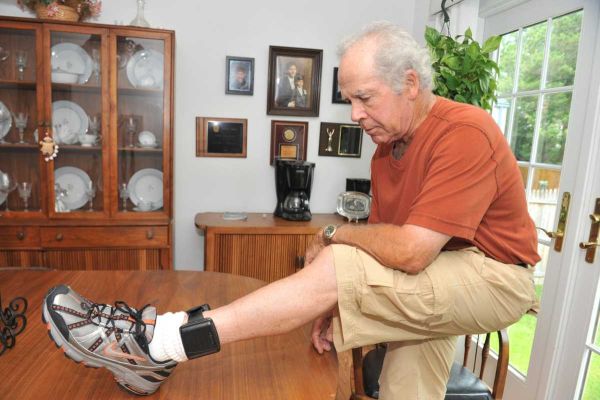
If you have been cited for a first or second-degree Minnesota DWI, you could find yourself subjected to alcohol-sensative monitoring time - even before you're ever found guilty and sentenced for a crime.  Upon arrest for certain Drunk Driving offenses, individuals face pre-trial conditions - often those include electronic home monitoring of possible alcohol consumption.

Often, as a condition of almost any DWI arrest, is abstaining from alcohol.  As the nature of those offenses becomes more serious - ie., that either the alcohol in your system at the time of the arrest was high and/or you have a history of being arrested for alcohol-related driving offenses - you could also be subjected to monitoring whereby you are constantly assessed to see whether you're in compliance with said condition. 

In the State of Minnesota, such monitoring is often invoked for people who fall into one of the following categories:
  • A third alcohol related driving offense within the past ten years;
  • A second such violation, if under 19 years old;
  • A violation that occurred when one's license was already cancelled as inimical to public safety for a prior violation; or
  • A violation involving an alcohol concentration of (.20) or more.
In addition to pre-trial monitoring, there can also be a post-sentencing condition imposed upon you as well.  According to state lawmakers, most third-time DWI offenders (and all DWI offenders under the age of 19) must submit to such "testing" for a for a period time while on probation - after they've been punished. 


What Can You Do?

Ask yourself this question: Are you ready to be monitored? It may not be up to you. But you can get the support, knowledgeable and experience of Minnesota DWI Attorney to help you and to ensure that your rights are protected and that the consequences imposed upon you are the best deal possible.

Call the Rolloff Law Office today to set up a free consultation.  Let me put my experience as a former prosecutor to work for you.  I'll use what the government taught me to your advantage.  Call today - (612) 234-1165.

Thursday, September 15, 2011

Top 5 Police Mistakes (DWI Arrests)

Police are human and as such they make mistakes.  An experienced Minnesota Criminal Defense Attorney will find those errors and work them to your benefit - winning you the outcomes you desire  including the possibility of getting your case dismissed. These are the Top 5 mistakes your lawyer should look for.

#1 - Did the Police Have a Reason to Pull You Over?

Cops can't stop a vehicle on a hunch or because you look "funny." To be a valid-legal stop, an officer must sufficiently explain to the Court why he pulled you over - such as observing a violation of the law, like Speeding. However, if he can't do that, then any/all of the evidence he gathers after that should be dismissed. 

#2 - Did the Officer Assume Too Much?

If the officer notes an odor of alcohol coming from your vehicle - did he just assume that that odor meant that you were intoxicated?  Granted, such an odor might support an assumption that someone has been drinking; however, it is by no means an indication of intoxication.  If this is all the officer is relying you - your attorney might be able to make an argument that could see the charges against you reduced and/or dismissed.

#3 - The Field Sobriety Tests

These roadside gymnastics have taken on an all to real importance in Drunk Driving cases, as such they are ripe for ferocious argument when mounting a vigorous DWI defense. Areas that an experienced Minnesota DWI Attorney needs to attack are: (a.) did the officer fail to disqualify you if you were physically unable to pass these exercises; (b) were the tests conducted in an unfair manner - under less than ideal circumstances; (c.) were you properly instructed as to how to perform the tests; and (d.) does the officer know how to assess one's performance on these tests.

#4 -  The Implied Consent Procedure

Prior to requesting a sample of your blood, breath or urine, you must be informed of your right to an attorney. If an officer failed to do this and/or make resources available to you to contact a lawyer - then a real strong argument can (and should) be made that the results of the test you take should be excluded in their entirety. Test results should also be excluded

If the results are suppressed, your case is all but done - because the blood alcohol number is often the only thing that cases such as this turn on. 

#5 - Test Refusal - Did You Really Refuse?

If law enforcement decide that you refused the test (which is often more complicated when someone actually agrees to the test, but the officer reads their behavior to mean otherwise) a question can always be raised about whether you actually refused. A good Minnesota Criminal Defense Attorney will seek to address whether you were ever asked about any physical problem you might have had that made taking the test impossible or whether you were ever given the option to perform a test other than blood, breath or urine.


What Should You Do?

If you're like most people, you probably didn't know that the police made the kinds of mistakes that I've just laid out and/or you didn't know know that these mistakes could significantly help your case. Well, believe me - they can.  Big Time.

Since leaving the county attorney's office, I've used the inside knowledge I've been given to to defend individuals who've been charged with Drunk Driving.  As a former prosecutor, I know exactly what needs to be in a police report and/or testified to in court.  If it isn't there - I'll effectively make an argument to the court that could see your charges reduced (or dismissed) and your license re-instated.

If you've been arrested for a Minnesota DWI, you need experienced legal representation right away. Call the Rolloff Law Office to set up a free, no obligation consultation and I'll explain exactly what I can do to help you. Call today - (612) 619-0262.

Thursday, September 8, 2011

Minnesota DWI Charges with a Test Below (.08)?


In Minnesota, we're told that the legal drinking limit is (.08). What that means is that if the alcohol content of your blood (your "BAC") is determined to be (.08) or higher, you are legally considered intoxicated and can be charged with Drunk Driving.

That being said, did you know that you can also be charged with a Minnesota DWI even though your BAC is found to be less than (.08)?

In a case where an individual's BAC is measured to be less than (.08), the government cannot offer the blood test to prove that the offender was driving drunk. Rather, what they will rely on (for charging - and at trial) are the observations made by the officer that made the arrest.

What he'll have to explain is how and why an individual's driving conduct and/or actions and appearance at the time of the stop lead the officer to conclude that the driver was under the influence of even a minimal amount of alcohol. Often this is done by offering evidence of any failed Field Sobriety Tests.

Granted, in many of these cases, a plea bargain is often available - but if you want to fight the charge - knows this: These matters are very defensible.


What Should You Do?

In order to navigate the often confusing legal system, your first best call should be to an experienced Minnesota DWI attorney.  If you want to take full advantage of the one shot you'll have to right this wrong - contact the Rolloff Law Office today for the comprehensive legal services that you'll need to ensure the best possible resolution of your DWI case.

Call today - (612) 234-1165 for a free, no obligation consultation.

Monday, July 25, 2011

One Minnesota DWI = Two Charges?


An all too common question I get as a Minnesota DWI Attorney is: "I was arrested for Drunk Driving, but I'm charged with breaking two different laws; why?"

In the State of Minnesota, when someone is arrested and charged with a DWI - the accusation is that that individual failed to operate his or her vehicle in the same, careful manner that a sober person would - under the same circumstances. 

In addition to that, bowing to pressure from the federal government - related to the dolling out of highway monies - states like Minnesota adopted per se Drunk Driving laws. These laws established a "legal limit" - as it regards the amount of alcohol you can legally have in your blood - before your driving becomes illegal.  In Minnesota, the limit was once (.10) --- now it is (.08). 


Therefore, if someone is found to have been operating and/or in physical control of a motor vehicle at a time in which the alcohol in his/her system was (.08) or higher - as established by a test of their blood, breath, or urine - they can be charged with a DWI.  Even if the person doesn't exhibit any of the typical signs of Drunk Driving, and is able to drive just fine, they can be charged with a DWI based only on their body's chemistry.

Generally, the government will usually charge both crimes: the traditional DWI (see Minn Stat § 169A.20,  subd. 1) where they accuse someone of being unable to drive with the same caution as a sober individual and the per se violation (see Minn Stat § 169A.20 subd. 5) for being above the legal limit.

In the end, a conviction on one charge is the same as a conviction on the other. Essentially, it's just two ways of charging the same crime and it just gives the government two bites at the same apple.

The good news (if you can call it that) is if someone is convicted of both Drunk Driving and being above the legal limit, they are only punished once.


If you have been arrested for Drunk Driving, your next best move is to contact an experienced Minnesota DWI Attorney for a free consultation to learn your rights.