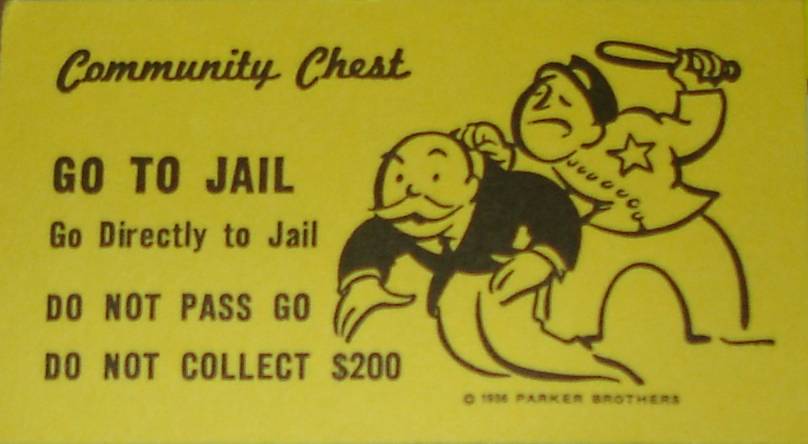
One of the most frequent questions that I get, as an experienced Minnesota Criminal Defense Attorney, from clients is “the cops never read me my rights ... does that matter?” If you were in custody and were interrogated, then yes, it does.
Never Read My Rights (Think of it this way)
Were you in custody?
Generally, the courts have look to the following factors to determine whether someone is in in custody: police interviewing a suspect at a police station; the
presence of multiple police officers; telling someone they are the prime
suspect; restraining the person’s freedom; and pointing a gun at
someone. Courts have identified the following factors as someone not in
custody: questioning at a person’s home; a suspect’s ability to leave at
any time; a nonthreatening environment; police informing someone they
are not under arrest; and the brevity of questioning. While not one of the above factors alone will be determinative.
Instead, the court will use a totality of the circumstances approach to
determine whether someone is in custody.
Were you interrogated?
A suspect may make a voluntary statement to the police or confess to a
crime without any questioning at all. These statements may be admitted
into evidence without a Miranda warning taking place, because no
interrogation took place. But even if the police do not ask any specific
questions, they may still not be coercive in their actions or words.
The “the term ‘interrogation’ under Miranda refers not only to
express questioning, but also to any words or actions on the part of
the police (other than those normally attendant to arrest and custody)
that the police should know are reasonably likely to elicit an
incriminating response from the suspect.”
In Minnesota, the rule isL “an interrogation is custodial if, based on all the
surrounding circumstances, ‘a reasonable person under the circumstances
would believe that he or she was in police custody of the degree
associated with formal arrest.’”
What's Going to Happen?
Many arrests take place without Miranda ever being read to the
accused. For example, in DWI cases, officers are generally only required
to read someone their Miranda rights after they decide whether they are
going to take an evidentiary test. Further, many traffic stops and
offenses never trigger Miranda warnings. Thank Hollywood for the
idea that officers are required to read Miranda for every arrest.
Sadly, the remedy for a Miranda violation also often does not result in a
dismissal, rather the remedy for a Miranda violation is the suppression
of statements made after the violation and often evidence obtained
because of those statements. So even if you were in custody and were
being interrogated, and the cops did not read you your Miranda rights,
then the prosecution may still move forward with its case if it has
enough other evidence against you.
Still have questions - please feel free to Call The Rolloff Law Office --- for FREE ANSWERS: (612) 234-1165
Things you might need to know if you've been arrested for an offense like Drunk Driving. If you are interested, read on. If you're in need of a Minnesota Criminal Defense attorney - CALL or TEXT: (612) 619-0262.
Showing posts with label miranda rights. Show all posts
Friday, February 23, 2018
Tuesday, June 11, 2013
Not Read You Rights? (Explained)
Did Cops Fail to Read You Your Rights?
Many people in the State of Minnesota believe that if a police officer does not read you your rights, your case will get dismissed. Unfortunately for people charged with a crime, this is not true.
“Your Rights”, also known as the Miranda Rights, only apply if the officer asks you questions while you are in custody. This is often referred to as custodial interrogation. This means if you are in the officer’s or the police department’s custody, and not free to leave, and an officer asks you questions without first reading you your Miranda Rights, your statements cannot be used against you at trial.
However, if you are: (a) not in custody, or (b) you are arrested and you are not read your Miranda Rights, that does not mean the charges against you will be dismissed, it only applies to your statements being admissible at trial --- those things that you tell a law enforcement officer that is against your interest.
Of course this isn't the only time your eights might be tread upon, that's why you should contact a Minnesota Criminal Defense Attorney.
If they are not read to you, it does not mean your case is dismissed, however, it could mean that your statements cannot be used against you at your trial ... and that might lead to a verdict in your favor.
If you want to know more, call the Rolloff Law Office: (612) 234-1165
Monday, March 18, 2013
Miranda Rights (Explained)
As a Minnesota Criminal Defense Attorney I get a lot of questions --- one of the biggest is about the Miranda Rights. Here's a short-hand answer for you about your rights.
"Miranda Rights" refer to some of the rights that are contained in the 5th amendment to the U.S. Constitution.
The 5th Amendment says:
No person shall be held to answer for a capital, or otherwise infamous crime, unless on presentment or indictment of a Grand Jury, except in cases arising in the land or naval forces, or in the Militia, when in actual service in time of War or public danger; nor shall any person be subject for the same offense to be twice put in jeopardy of life or limb; nor shall be compelled in any criminal case to be a witness against himself, nor be deprived of life, liberty, or property, without due process of law; nor shall private property be taken for public use, without just compensation.
When and How Can You Use Your Miranda Rights?
In order for your Miranda Rights to "attach" - that is, to be applicable in your situation, three things must have happened: You must be in custody, police must be interrogating you, and you must have asserted your Miranda Rights. The first two conditions are known as custodial interrogation.
The US Supreme Court in Miranda v. Arizona defined custodial interrogation as "questioning initiated by law enforcement officers after a person has been taken into custody or otherwise deprived of his freedom of action in any significant way."
In essence, police will have made you feel like you were not free to go - either by arresting you, by holding you in custody, or by significantly depriving you of your freedom of action; they will read your Miranda Rights to you; they will ask you if you wish to talk to them and thereby waive your rights; and you can choose to assert your rights at that time, or to waive your rights and talk to them. Remember, the keys are that you do not feel free to leave and the police are doing the questioning. The last element, that you have asserted your Miranda Rights, is the element that is up to you: You must assert your rights clearly and verbally.
A good way to make sure you exercise your Miranda Rights is to go through this list:
- Is there police custody (am I not free to leave)?
- Is there interrogation (am I being asked questions, instead of initiating)?
- Was a Miranda Warning read before questioning began and after custody was established?
- Was there a waiver of Miranda Rights?
- Was there an explicit assertion of Miranda Rights - either to remain silent, consult with a Minnesota DUI lawyer or both?
- If there was a waiver and then an assertion later on, did questioning stop immediately?
- Were any statements made after Miranda Rights were asserted and police stopped questioning?
- Did any questioning happened after a lawyer was requested that was outside the presence of the lawyer?
- Assert your right to remain silent IMMEDIATELY
- Contact a Minnesota DUI lawyer as soon as you can
- Do not say anything more once you have asserted your rights
- And, be cooperative and polite throughout your encounters with police.
If you have questions about your rights, call the Rolloff Law Office for a FREE CONSULTATION: (612) 234-1165.
Thursday, January 31, 2013
How to Deal With The Police (Explained)
Although you probably don't need an experienced Minnesota Criminal Defense Attorney to tell you this --- a lot of it is common sense --- there is a good way and a bad way to "act" when one has contact with law enforcement. Here are some simple "dos and don'ts."
- Do be polite with the police officer;
- Do identify yourself correctly;
- Don't argue with the officer;
- Don't try to explain or make excuses to the officer;
- Don't discuss your situation with anyone, before talking to an attorney;
- Don't discuss your situation with anyone else, while you are in custody;
- Don't try to "make a deal" with the police officers;
- Don't make any statements to the police, for any reason;
- Don't sign any statements for the police as the price to go home; and
- Call The Rolloff Law Office!
If you really want to know more, call the Rolloff Law Office today to set up a FREE CONSULTATION: (612) 234-1165.
Tuesday, August 28, 2012
Charged w/ a Crime Doesn't Mean You're Guilty (Explained)
Sure, it probably comes as no surprise that many (if not most) people accused of crimes are in fact guilty --- maybe not of the crime they're charged but something - right?
Negotiator
All too often, individuals often come to me with little or no hope, wondering what (if anything) can be done. One of the first things that I tell them is that although they may be guilty of something, they may not be guilty of the specific crime they are charged with. An experienced Minnesota Criminal Defense Attorney will make sure that the crime is properly charged, and that all the applicable rules and laws are followed throughout the case. In addition, a lawyer is often able to negotiate a favorable settlement, even in cases of clear guilt. If a lawyer is able to reduce a presumed sentence by even a month or two --- or the level of the charge from say a Felony to a Misdemeanor --- then the fees you're charged ill have been well worth it. Additionally, good lawyers are often able to negotiate reduced fines, reduced jail time and probation, etc.
Counselor
Lawyers play many roles --- all too often those accused of crimes are often in need of something more than merely being represented in court. Sometimes the crime itself is more accurately described as the symptom of a more serious problem, such as a chemical addiction or a mental health issue. Criminals may do bad things, but I firmly believe they are not bad people. Generally speaking, their biggest problem is what could be described as a “lack of foresight” or exercising poor judgement.
A lawyer can help counsel their client, advising them to address any underlying issues. This type of advice includes encouraging the client to seek treatment, find a job or start education, and to keep their life happy and stable. Depending on the client, I sometimes encourage them to seek some spiritual guidance as well.
There is a balance that must be struck, however. Those accused of crimes do not need another person to lecture them on their mistakes. Most already acknowledge that they screwed up somehow, and most are ready to make a change. It is the lawyer’s role to encourage them and assist them in making the changes they want to make. One of the very best parts about being a Minnesota Criminal Defense Attorney is that I have the privilege of finding people at the time in their lives where they are most willing to make changes for the better. Rather than focusing too much on the past, I believe it is best to focus on the future. Despite the obstacles, the future for most criminals can be very bright, especially with the right encouragement and the right counsel.
If you or someone you love is looking for help with a legal issue - please call The Rolloff Law Office today to set up a FREE CONSULTATION and start down the path of doing the next right thing. Call today: (612) 234-1165
Subscribe to:
Posts (Atom)