Showing posts with label county attorney. Show all posts

Thursday, June 7, 2012

Minnesota Criminal Sentences (Explained)


As a Minnesota Criminal Defense Attorney I get questions --- lots and lots of questions.  Here's one -about outcomes to criminal cases -- arranged from "best" to worst.

What are Some of the Different Types of Minnesota Criminal Sentences?
  • Continuance for Dismissal/Continuance without Prosecution (CFD/CWOP): The state sets aside your case for a predetermined amount of time, and they dismiss the case after that period of time if you fulfill their conditions.
  • Stay of Adjudication: The defendant offers a guilty plea to the court, but the court does not accept it. There is then a probationary period set with certain conditions. If the terms of the probationary period are met, the case is dismissed at the end of that period.
  • Stay of Imposition: The defendant offers a guilty plea to the court which the court accepts, but does not impose the full sentence. There is a probationary period set with certain conditions, and at the end of the probationary period (if all conditions are fulfilled) the conviction may be reduced (e.g. from a felony to a misdemeanor) or it may be vacated and dismissed.
  • Stay of Execution of Sentence: The defendant offers a guilty plea which the court accepts. The defendant is then placed on probation, with certain (or all) terms of the sentence are stayed (not given). For example, someone who is sentence to 45 days in jail “stayed” would not have to go to jail if they successfully fulfill the terms of their probation.
  • Execution of Sentence: The defendant offers a guilty plea which the court accepts, and the sentence is imposed without any terms stayed. For example, someone who is sentenced to 30 days jail “executed” would actually have to serve that jail time.

Want to Know More?

Obviously, there's more to what goes on in court that can be set forth here.  If you have any questions about Sentences --- or anything related to your dilemma --- call the Rolloff Law Office today and set up an apointment for a Free Consultation: (612) 234-1165.

Saturday, December 10, 2011

Minnesota Vehilce Stops (Explained)


Believe it or not, the police have to have an excuse to pull you over.  To some this might come as a shock - but that's the law.  On area ripe for consideration i a Drunk Driving case (or any crime really - whether a vehicle is involved or not) is the question of whether law enforcement has a valid reason to stop and/or have contact with you.  As such, here are a couple of things to keep in mind.

What Constitutes an Unlawful Police Stop?

Despite one's best efforts, at any moment, a police officer can stop and pull you over. Sometimes these stops are based on a legitimate concern the officer has about your driving or your safety or whatnot.  However, far too often, theses "stops" are completely without merit and border on being illegal.

An officer is only legally empowered to pull you over if he has witnessed you break the law, or has sufficient cause to believe that you are breaking the law and they need to further investigate your behavior.

Unless you are engaging in specific behavior that catches an officer’s eye, they are not allowed to just pull you over or stop you on the street.  If they do this - without just cause - there may be grounds for having your case dismissed.

Vehicle Stops

The police are on the look-out for multiple activities that may indicate a driver is operating their vehicle under the influence of alcohol or drugs. These may include reckless maneuvers such as swerving in and out of lanes, driving excessively fast, running red lights, failing to stop at posted stop signs and driving too slow. Officers aren’t above the law however, and can be held accountable for failing to properly conduct themselves.


What Should You Do?

If your arrest - for a DWI or possession of contraband/drugs - was the result of being pulled over by a police officer without probable cause, an experienced Minnesota DWI Attorney can provide you with the proper legal insight to hopefully arrest overturned.  I have ample experience working cases such as these from both sides of the aisle - from the prosecution side and the criminal defense side - and I'm thoroughly familiar with all elements of such arrests, including officers unlawfully pulling over a motorist.

The Rolloff Law Office will look intently into the circumstances surrounding your arrest in order to determine if the officer acted improperly when pulling you over, and thus violated your civil rights. I’m passionate about defending people against charges of Drunk Driving and will fight tirelessly on your behalf to try and have the charges dropped or reduced.  Call or text today - to (612) 234-1165- to set up a free, no obligation consultation.

Wednesday, October 5, 2011

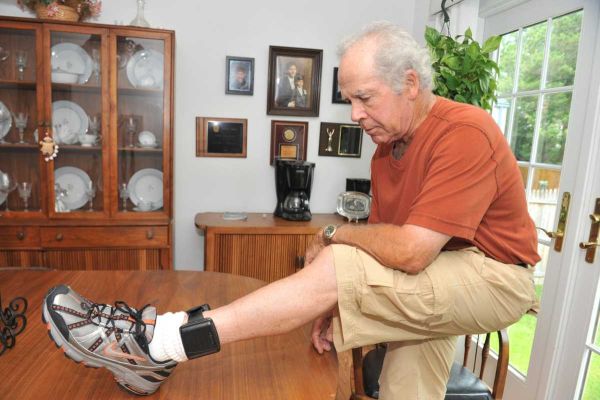
MN DWI - Alcohol Monitoring (Explained)


If you have been cited for a first or second-degree Minnesota DWI, you could find yourself subjected to alcohol-sensative monitoring time - even before you're ever found guilty and sentenced for a crime.  Upon arrest for certain Drunk Driving offenses, individuals face pre-trial conditions - often those include electronic home monitoring of possible alcohol consumption.

Often, as a condition of almost any DWI arrest, is abstaining from alcohol.  As the nature of those offenses becomes more serious - ie., that either the alcohol in your system at the time of the arrest was high and/or you have a history of being arrested for alcohol-related driving offenses - you could also be subjected to monitoring whereby you are constantly assessed to see whether you're in compliance with said condition. 

In the State of Minnesota, such monitoring is often invoked for people who fall into one of the following categories:
  • A third alcohol related driving offense within the past ten years;
  • A second such violation, if under 19 years old;
  • A violation that occurred when one's license was already cancelled as inimical to public safety for a prior violation; or
  • A violation involving an alcohol concentration of (.20) or more.
In addition to pre-trial monitoring, there can also be a post-sentencing condition imposed upon you as well.  According to state lawmakers, most third-time DWI offenders (and all DWI offenders under the age of 19) must submit to such "testing" for a for a period time while on probation - after they've been punished. 


What Can You Do?

Ask yourself this question: Are you ready to be monitored? It may not be up to you. But you can get the support, knowledgeable and experience of Minnesota DWI Attorney to help you and to ensure that your rights are protected and that the consequences imposed upon you are the best deal possible.

Call the Rolloff Law Office today to set up a free consultation.  Let me put my experience as a former prosecutor to work for you.  I'll use what the government taught me to your advantage.  Call today - (612) 234-1165.

Friday, September 16, 2011

Minnesota Probation Violations (Explained)


Often as part of every criminal sentence meted out by a judge - for a misdemeanor, gross misdemeanor and felony plea - is the prospect of being placed on Probation.  In my opinion, the system would want one to believe that this is a type of leniency that allows a convicted individual to remain in or re-enter society.  But, as anyone who has ever been placed on probation - there's often nothing too easy abou it.

Generally speaking, defendants may be sentenced only to a probationary term or probation may be granted after some time in custody has been served.  If someone is place on probation, that person is often supervised by an agent - who is employed by the corrections system.

If you receive notice of a Probation Violation, or even if you just think you may have violated your probation but have not yet been suspected or accused of it, you should quickly contact an experienced Minnesota Probation Violation Defense Attorney.

Probation Violations (Defined)

Because Probation is a form of leniency, it can be revoked at any time.  This often is the case when someone violates the terms of the probation sentence laid out by the judge.  A few examples of such violations includes:incurring a new criminal charge, failing to submit to or failing a drug/alcohol test, moving - without informing your agent, missing a scheduled probation meeting, and/or failing to appear for court.


If You've Violated Your Probation

If you are suspected of committing a violation, you'll often receive notice of it and be ordered to appear in court.  At a violation or Probation revocation hearing, the court will determine whether the violation actually occurred and then you'll be asked if you admit or deny the violation.  If you deny it, the government must put forth evidence showing that it is more likely than not that you in fact did fail to follow the court's order.  You'll also have a chance to put forth your own evidence.  Then, the judge decides if that burden is met. 

Probation Violations (Consequences)

If you're found to have violated your probation, there are a number of possible outcomes - good and bad, such as: continuing the probation without punishment for the violation,  modifying the conditions of the probation or extending the length of probation,  revoking the probation and executing the stayed (ie., suspended) jail sentence hanging over the violator's head. This basically means that your original sentence would be re-activated.

Probation Violations Defenses

Since the burden of proof is much lower at a Probation Violation hearing than at trial, it is very important that you be represented an experienced Minnesota Criminal Defense Attorney.  Often the best defense is no defense at all; rather, I've found that my best successes come when working with the government's lawyers to arrive at an agreement that elevates the need for a hearing and/or the harshest of consequences. Even if your violation stems from a new criminal offense, not only can I fight to win you a dismissal or acquittal on those charges - I can also work to ensure that the new sentence runs concurrently with (and not consecutively to) the probation sentence.


What Should You Do?

For a long time now, Minnesota law has recognized that people who have make a few, isolated mistakes while on probation should have the opportunity to not have that error to lead to the ultimate consequence.  If you feel as though what you've read here applies to you, contact an experienced Minnesota Probation Violation Hearing Attorney to discuss your questions and concerns and to get the ball rolling working to ensure that your slip doesn't continue to hinder your future.